The mental side, broken into skills you can actually train.
Notice how you think, feel, and act. Every skill starts with seeing yourself clearly.
Understand how thoughts, emotions, and habits shape performance, so they stop feeling random.
Earned, not hyped. Build it from preparation and small daily wins.
Know your why. Drive that depends on results or approval runs out fast.
Sleep, stress, and support are not extras. They decide how much you have to give.
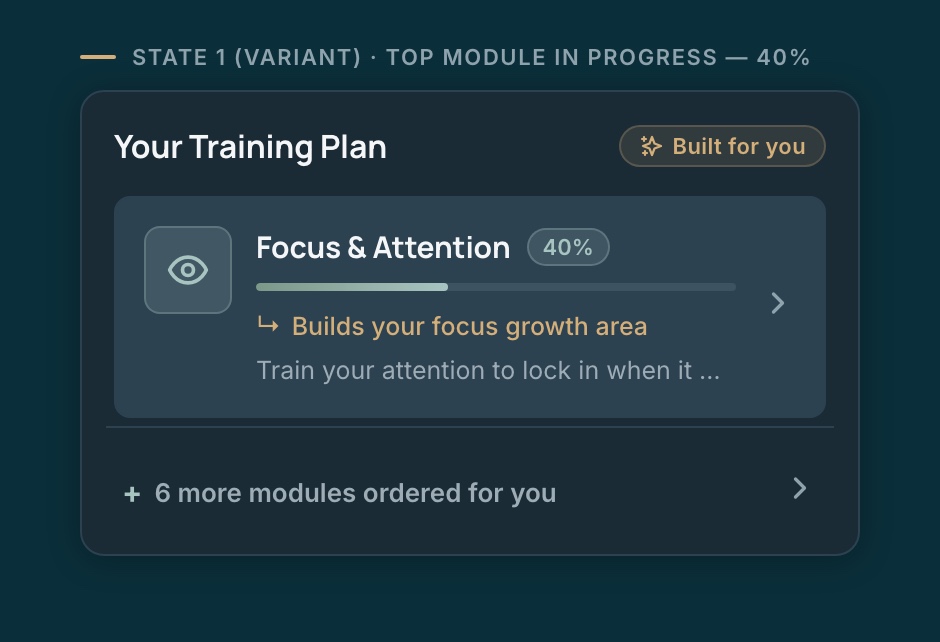
Hold attention where it belongs: the next rep, not the last one.
Reset after mistakes. The bounce-back is a skill, not a personality trait.
Same drills, different results. Clear goals, full effort, and honest review turn reps into progress.
Too flat and you have nothing to give. Too wired and it slips. Know your zone and the way back to it.
A hard thought or a rush of nerves does not have to decide your next move.
How the training actually reaches you.
Where you are right now.
A series of short assessments by domain help map your mental profile. Honest, plain-language results that help you know where to focus.
Learn a skill, then practice it.
Short guided interactive prompts. You finish with a specific cue or routine to take into training that week.
A two-minute reset, daily.
Rate readiness, name what’s on your mind, breathe. The check-in helps guide you to the tool you need in that exact moment.
Quiet practice, stacked daily.
Most athletes spend 3-10 minutes a day in CTLST to reap the benefits. The work shows up where you need it: the start line, the fourth quarter, and after competition.
Built for teen athletes and their coaches.
Individual athletes
Train on your own time: before practice, on the bus, the night before an event.
Club & school teams
Roster-wide programs with coach insights, team assessment scores and per-athlete tips.
Coaches & program directors
See your athletes’ assessments, get cues for training, help them maximize potential.